Brown Engineering

  • Subscribe to our RSS feed.
  • Twitter
  • StumbleUpon
  • Reddit
  • Facebook
  • Digg

Monday, 12 September 2011

Brown’s Lei Yang ScM ’11 PhD ’11 Named a Sigma Xi Fresh Face as part of 125th Anniversary Celebration

Posted on 13:08 by Unknown
Brown University engineering alumnus Lei Yang ScM ’11 PhD ’11 has been selected by the 125th Anniversary Planning Committee as a Sigma Xi Fresh Face. Sigma Xi, as part of its anniversary celebration, is recognizing select “students and early-career members who have shown promise in their respective fields of study and dedication to Sigma Xi.”

Yang who was elected to full membership in Sigma Xi in 2011, received the Sigma Xi Outstanding Graduate Student Award at Brown in 2011. At the 2010 Sigma Xi Northeast Regional Research Poster Conference, Dr. Yang won the first place award.
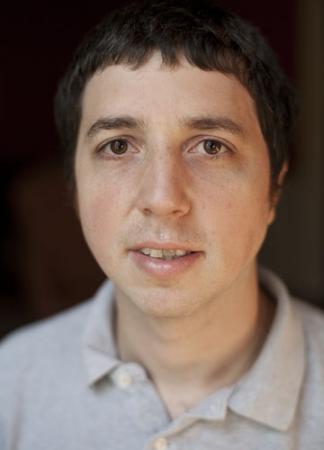
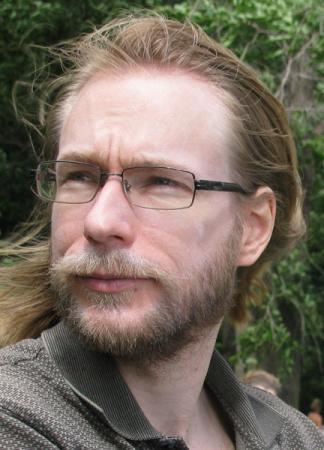
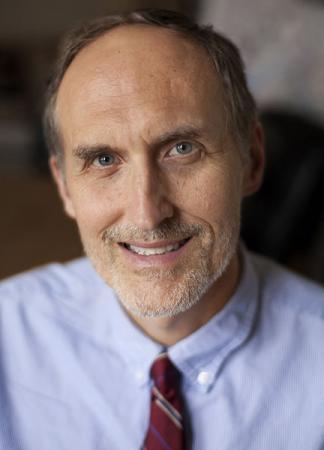
Brian Sheldon, Lei Yang, Thomas Webster

Yang worked with Professors Thomas Webster and Brian Sheldon while obtaining his Ph.D. at Brown. His doctoral dissertation was on “Nanocrystaline Diamond for Orthopedic Implant Coating Applications”. His work was recognized with the outstanding thesis award from the Brown School of Engineering in 2011. He is currently working as a postdoctoral research associate under Sheldon on “Electrical Field Induced Stress Evolution in Anodic Tantalum Oxide Films”.

Yang is already an accomplished researcher with three patents and one pending patent to his credit. He has published more than 15 refereed journal papers, and two book chapters.

He is the founding editor of Nano Bulletin, and has reviewed manuscripts or proposals for 13 research journals. He has given 25 conference presentations and five invited talks.
Read More
Posted in award, sigma xi, yang | No comments

Friday, 9 September 2011

Meet the Faculty: Andrew Peterson

Posted on 08:04 by Unknown
Someday, the world will run short of the hydrocarbons it currently uses for energy. Andrew Peterson is searching for a way to catalyze the conversion of renewable resources into hydrocarbon-based fuels.

It’s hard to imagine that society would abandon its use of carbon-based energy sources. So the question now is whether society can find a way to derive the benefits of hydrocarbons without exhausting supply. One answer may lie in producing carbon-based fuels from renewable sources.

“With renewable carbon-based fuels, your only choice is biomass,” said Andrew Peterson, who will join the School of Engineering this January as an assistant professor. “It’s great, but it’s limited. We need other options.”

Peterson’s primary research is devoted to figuring out how other renewable energies — sun, wind, maybe nuclear — can be harnessed to deliver the kick that hydrocarbons so easily provide. Scientists have investigated consummating the conversion by using a twin-electrode system that ultimately splits carbon dioxide molecules into hydrocarbons. The trick, however, is overcoming the steep energy threshold needed to pull off the reaction. “That’s the challenge. You need an electrocatalyst,” Peterson said.

Peterson’s approach is to bring advanced math to the problem. “I use quantum mechanics calculations to understand the reactions at those electrodes and then use that theory to design catalysts to make those reactions go better,” he said.

“At the end of the day, it’s about converting chemicals,” he continued, “and the way to do that is by a catalyst. That field has just hit the point in the last few years to design these catalysts from first principles, from quantum mechanics.”

There was no epiphany for the 35-year-old to enter chemical engineering. His father was a superintendent in the Dilworth, Minn., school district where Peterson grew up. His mother taught special-education and math classes in a nearby school district. He considered himself a “science nerd” — not a dynamite story.

After graduating from the University of Minnesota, majoring in chemical engineering, Peterson earned his master and doctorate degrees from the Massachusetts Institute of Technology. As a graduate student, he banded together with a few classmates to form a company, C3 Bioenergy. Working nights and weekends, the young scientists demonstrated that the same feedstock used for ethanol could be transformed into propane through fermentation and treatment by water under high pressure and temperature. The idea got media attention and caught the eyes of investors. The group placed second in MIT’s $100K Business Plan Competition in 2007.

Despite the interest and attention, Peterson decided it wasn’t worth the risk. “It got to the point where we had to choose whether to leave graduate school and leave that path. It was a good choice (not to), I think.”

Even though he decided not to develop his company, Peterson has earned his corporate chops. He worked at the Cabot Corporation in Massachusetts and at British Petroleum and was a research engineer for four years at General Mills, where his innovations led to two patents. (He has three patents pending on separate inventions.)

He said the experience working for companies has helped him appreciate that his research should have a definable application. “Although I’m theoretically based, I don’t want (my research) to be abstract in the real world.”

Peterson moves to Providence with his wife, Alissa, a mechanical engineer who obtained a master’s degree at MIT. He is an avid hiker who has pulled off the Presidential Traverse, which involves summiting peaks named after presidents in the White Mountains in New Hampshire in a day or two.

By Richard Lewis
Read More
Posted in Andrew Peterson | No comments

Meet the Faculty: Pedro Felzenszwalb

Posted on 07:12 by Unknown
Any small child can see that a truck is a truck and a bridge is a bridge. Computers, not so much. Pedro Felzenszwalb is trying to help computers “understand” the digital world they “see.”

Our ability to pick out objects and immediately characterize them is a trait we tend to take for granted. Even toddlers can distinguish a car from other objects in a given scene, such as a bus, a truck, a tree, a house, or a road.

“What seems simple is actually quite complex,” said Pedro Felzenszwalb, incoming associate professor of engineering. “It’s very subconscious. There’s a lot going on, and we don’t understand what the brain is doing, although we realize that there’s a lot that the brain is doing.”

Much of Felzenszwalb’s research is focused on computer vision, a field that uses algorithms and modeling to teach machines how to see. It’s tremendously complex, requiring the bridging of “semantic gaps,” as Felzenszwalb describes them, to enable computers to properly interpret visual cues in order to understand the content of an image.

“A lot of my work is trying to figure out how to build models that can represent interesting things but at the same time are amenable to computation,” Felzenszwalb said.

Back to the car. How can a computer model successfully describe a car? “These models are difficult to come up with, because there’s a lot going on when the image is formed,” Felzenszwalb said. “There are many different types, many different materials (for cars). You take a picture, and you need to factor in how the car looks based on color, the position of the camera relative to the car, other objects in the image, the light reflected, et cetera.”

Computer vision has important applications, including robotics and artificial intelligence, medical image analysis and computer graphics, as well as aiding our understanding of human perception and intelligence.

Felzenszwalb, 34, comes from the University of Chicago, where he was associate professor of computer science. He said that at Brown, he will be part of a computer-engineering group that will include researchers from applied mathematics, computer science, engineering, and possibly other disciplines. “It’s hard to box in,” he said.

Felzenszwalb grew up in Rio de Janeiro. His father is a mathematics professor at the Federal University of Rio de Janeiro, while his mother is a ceramics artist. His interest in computers began to blossom when as a young boy he programmed his own video games and built his own computer from a kit he had ordered. “You had to program it by flipping switches. I really like that kind of stuff,” he said.

He enrolled at Cornell and got involved in the robotics lab. “I’ve always really liked robots. I thought they were cool,” he said.

From there, Felzenszwalb earned his master’s and Ph.D. degrees in computer science at the Massachusetts Institute of Technology. He joined the faculty at Chicago in 2004 and was elevated to associate professor four years later.

He and his wife, Caroline Klivans (whom he met at Cornell), have bought a house on College Hill. The couple plan to get outside as often as they can with their children, Aaron, 4, and Audrey, 1.

By Richard Lewis
Read More
Posted in Felzenszwalb | No comments

Thursday, 8 September 2011

Meet the Faculty: Axel van de Walle

Posted on 06:29 by Unknown
Devising and then testing materials for a given application can consume vast quantities of time and effort. Axel van de Walle uses computers to predict how materials will perform under certain conditions. The limits to technological progress, he says, often lie in the materials.

Axel van de Walle is like a modern-day alchemist. Where old-school scientists, searching for a particular compound, mixed elements and noted the results, van de Walle uses computers and quantum mechanics to predict the end products of interactions.

“The idea is that it takes a lot of manpower and man-hours to do something experimentally,” said the incoming associate professor of engineering. “If you want to try thousands of combinations, you can, but you’ll need lots of research assistants, and it will take a lot of time. But if you can program a computer to do it, suddenly it becomes a lot more feasible (in terms of time and money). You don’t have to pay benefits to a computer.”

Of course, it’s nowhere near that easy. Van de Walle is quick to point out that he and others in the field are building on years of experimental work in phase diagrams, the road map in materials science that involves the mixing of elements. What he brings to the table is applying knowledge of the geometric structure of atoms and the dynamics of those interactions to narrow the focus in the hunt for new, exciting materials.

One of van de Walle’s interests is in refractory materials, which resist high temperatures without melting. Discovering materials that can withstand hotter temperatures has obvious potential applications, from turbine engines to rockets — or any fuel-burning device for that matter.

It’s that societal benefit derived from fundamental research that rings true for van de Walle and led him to materials engineering. “It makes you feel better,” he said. “You don’t want to be in your own bubble.”

The 39-year-old van de Walle grew up in Quebec City. His father was a mining geologist contracted to government and industry, and his mother was a librarian. He described his parents as “scientifically curious,” and said he had always been interested in science. As a child, he was fascinated by physics. “But then I realized, maybe I also like things with concrete applications,” he said. “And then I noticed that materials (science) tends to be a pretty general topic. It seemed like there were open questions that were difficult and useful.”

One such question, he noted, revolves around energy. The efficient harnessing or production of energy is not limited so much by ideas, but by the right materials. “If you think about batteries and fuel cells,” van de Walle said, “the limits lie in the materials. People know how to make a battery or a fuel cell. But to make them work even better, you need improvements in the materials.”

Van de Walle earned his Ph.D. in materials science and engineering at the Massachusetts Institute of Technology. He comes to Brown from the California Institute of Technology, where he was an assistant professor in the Engineering and Applied Science Division. He also comes with substantial grant support. The day he started at Brown, he got official confirmation of the most recent funding, van de Walle happily relayed, thanks to the grant officers at the University who helped write the application before he had stepped on campus.

This fall, he will teach a class on thermodynamics. Beyond teaching and research, van de Walle expects to have little free time, with his second child born less than a month ago.

By Richard Lewis
Read More
Posted in van de Walle | No comments

Wednesday, 7 September 2011

Meet the Faculty: Nitin Padture

Posted on 12:33 by Unknown
Ceramics is an engineering field with limitless possibilities and versatility, Nitin Padture says. Ceramics, for example, can be used as an insulator and as a superconductor.

To some, ceramics is the stuff of art, the ingredient for fashioning vases, figures and other pretty objects. To Nitin Padture, ceramics is an engineer’s putty, a material prized for its conductivity and its resistance to heat.

Padture, incoming professor of engineering, has devoted much of his nearly 30-year career to researching the uses of ceramics. He has come up with several innovations, including a thermal coating to optimize the performance of jet engines and to protect the super-hot turbines in power plants.

“Since I was an undergraduate, I’ve always been interested in ceramics,” said Padture, who was the founding director of the National Science Foundation-funded Center for Emergent Materials at The Ohio State University before coming to Brown. “I sensed there were a lot of possibilities. It’s such a versatile field, and it can have such a wide range of properties, from being an insulator to a superconductor. It always attracted me, and so I followed it.”

Padture, born in India, grew up on the industry floor and often accompanied his father, a civil engineer, to the foundries he managed, where workers manufactured castings for big companies. “I would watch these enormous machines melt this steel, white hot sparks everywhere. I’ve always been fascinated by these materials. It was the highlight of our summer.”

When he wasn’t at the factory, he tinkered at home. Padture had his own workshop, building motors, generators and telephones. As a boy of 10 or 11, he built a telephone using old-fashioned shaving blades stuck vertically into a hollow box, with a pencil lead balanced between the blades to convert the vibrations to an electrical signal that corresponds to sound. “I could speak into it, and you could hear it in the room next door,” he said.

He graduated to bigger things at the Indian Institute of Technology, Bombay, an institution with which Brown established a multifaceted partnership in 2010. There, Padture discovered ceramics after learning that the school did not offer materials science.

He worked with ceramics ever since. In 2007, Padture and colleagues published a paper showing that zirconium dioxide — synthetic diamonds — could be used to coat jet engine turbines blades, which meant the engines could run at higher temperatures and more efficiently. In another paper, he discovered a new class of ceramic coatings that could protect jet engines from volcanic ash, a worry to the airline industry after a volcanic eruption in Iceland grounded European air travel for days last year.

The ceramic coatings also could be used by the power industry, where gas turbines generate 23 percent of the country’s electricity. To operate most efficiently, temperatures need to reach 1,400 degrees Celsius. The ceramic coating prevents the two-story-high gas turbines from melting the metallic components within.

Padture also is investigating graphene, the single-atom thick carbon sheets that are the current darlings of materials science for potential uses in electronics and other fields. He has developed a technique to stamp many graphene sheets onto a substrate at once, in precise locations. The method could usher in high-throughput manufacturing of graphene into computer chips.

“We’re still working on it, but it has the potential to become a viable method for making site-specific graphene sheets,” Padture said. He expects to collaborate with engineering professors Huajian Gao, Robert Hurt, Brian Sheldon, and Vivek Shenoy. “That was a draw — people at Brown who work in areas similar to mine — and I can bring something to the table.”

When not teaching or in his lab, Padture likely will be cruising the countryside on his cherished motorcycle, an Aprilia Futura RST 1000. Chances are neither his wife, Sherilyn, nor his son, Siddharth, an undergraduate at Boston University, will be riding along. “She doesn’t mind me doing this, but she’s not that keen on it,” he said.

By Richard Lewis
Read More
Posted in padture | No comments

Meet the Faculty: Lawrence Larson

Posted on 11:43 by Unknown
Integrated circuits, wireless communications, computer engineering — Larry Larson had a rich research background when he began taking on senior administrative responsibilities at the University of California–San Diego. The chance to be the first dean of Brown’s School of Engineering was an exciting prospect.

Larry Larson comes to Brown University as more than faculty. He comes as the founding dean of the newly created Brown School of Engineering.

Larson started as dean on July 1. After a summer on the job, he has enunciated a vision for the school: Recruit the best faculty; build modern, expanded space for research; in time, move into a new building.
“When really great people come to a place, what are they looking for?” Larson said. “They’re looking for great people to latch onto. They’re looking for space to become world leaders in research. That’s the vision I’m trying to help Brown University realize. I have bought into that.”

In a way, this is the third and final act of a distinguished career for the 53-year-old Larson. For 16 years, he worked at Hughes Research Laboratories. There, he pioneered the development of analog integrated circuits and new generations of low-noise high-electron mobility transistors (HEMTs), as well as microwave integrated circuits in SiGe HBT technology.

In a presentation late last year titled “Wireless Everywhere and in Everything,” Larson predicted that within a decade wireless devices and sensors will be so inexpensive that they can be embedded into almost any manufactured object and located almost anywhere through GPS technology. “It’s not implausible to think that pretty much everything we think about in a cell phone is going to be on something the size of the head of a pin,” he said.

After Hughes, Larson entered academia, joining the faculty at the University of California–San Diego in 1996. From 2001 to 2006, he was director of the UCSD Center for Wireless Communications. During his tenure, the center had an annual budget of approximately $2.5 million that supported 25 faculty members and approximately 45 Ph.D. students, as well as partnering with a dozen companies. He also chaired the Electrical and Computer Engineering Department at UCSD’s Jacobs School of Engineering and was the first faculty member to hold the Communications Industry Chair.

Larson said he was quite comfortable at UCSD, with no plans to move, until he heard about the opening at Brown. It was the chance, he recalled, of leading a major research enterprise at an Ivy League school.

“President Simmons gave me a vision of a really excellent university that wants to grow its science research and engineering, while staying true to its excellence in education and the liberal arts,” Larson said.

He continued, “Now, I’m trying to leverage all the things I learned in research to the administrative side. I’m at the point in my life when I really want to make an impact and especially at a place like Brown.”

Although the majority of his time will be on the administrative side, Larson plans to pursue research into low-power microelectronics for brain interface applications and in health. He’s excited to work with peers such as John Donoghue in neuroscience and Arto Nurmikko in engineering, who are involved in a cutting-edge project to repair damaged signals in the human brain.

The move to the East Coast has other benefits as well. Larson’s daughter attends the Rhode Island School of Design, while his son is enrolled at Oberlin College, in Ohio. An exercise enthusiast, he and his wife are looking forward to exploring the bike and walking trails in Rhode Island.

By Richard Lewis
Read More
Posted in larson | No comments

Thursday, 1 September 2011

Brown School of Engineering to Host Open House for Prospective Students

Posted on 07:18 by Unknown
The Brown University School of Engineering will hold an open house on Saturday, September 24, from 1:00 p.m. – 4:00 p.m. in room 166 of the Barus and Holley building (184 Hope Street / Corner of Hope and George Streets). The faculty of the School of Engineering and the Office of Admissions invite prospective applicants, parents, teachers, and guidance counselors to attend this open house. 

The program will include an overview of the undergraduate programs of study, information about faculty and student research interests, opportunity to meet faculty and undergraduates from the School of Engineering, and a brief overview of admissions and financial aid.

Students are asked to please RSVP online by Monday, September 19. Students may  visit our event website or call (401) 863-7930 for further information.

The Brown undergraduate engineering program enrolls 400 students, and is the oldest in the Ivy League and the third oldest civilian program in the nation.  Students may earn a bachelor of science degree in one of seven ABET accredited programs: biomedical engineering, chemical and biochemical engineering, civil engineering, computer engineering, electrical engineering, materials engineering, or mechanical engineering.  

For any students arriving on campus early, the admissions office offers regularly scheduled information sessions at 10:00 a.m. and 11:00 a.m. and campus tours at 9:00 a.m., 10:00 a.m., and 11:00 a.m. Reservations are not necessary for these sessions. Tours leave from the Stephen Robert ’62 Campus Center located at 75 Waterman Street.
Read More
Posted in admissions, open house | No comments
Newer Posts Older Posts Home
Subscribe to: Posts (Atom)

Popular Posts

Categories

  • "Sirinrath Sirivisoot"
  • aaas
  • aaron
  • abet
  • accreditation
  • aceros
  • ACS
  • admission
  • admissions
  • advanced baby imaging lab
  • AIChE
  • AIChE ugrad award
  • AIMBE
  • almeida
  • alumni
  • Andrew Peterson
  • apoE4
  • archaeology
  • archambault
  • argyria
  • ARPA-E
  • article
  • artificial ovary
  • asme
  • associate dean
  • audax
  • audio
  • awar
  • award
  • axena
  • Aziz
  • Baek
  • bahar computer conference
  • banyan
  • bashevkin
  • bats
  • battery
  • beam
  • BEAR Day
  • bio
  • biodiesel
  • biofilm
  • biofuel
  • blume
  • bme
  • bmes
  • book
  • borton
  • bower
  • brain initiative
  • Brain Science
  • brain sensor
  • brain-computer interface
  • braingate
  • braingate2
  • breuer
  • breuer bats reuters
  • briant
  • brown institute of brain science
  • bull
  • bull risd car
  • business plan
  • calakli
  • calo
  • CAMR
  • car
  • carbon
  • career fair
  • Caswell
  • catena
  • cave
  • CfNN
  • chemical innovation program
  • China
  • civil engineering
  • coda
  • coe-sullivan
  • collaboration
  • commencement
  • competition
  • Computational Materials Science
  • concussion
  • cooper
  • cord-clamping
  • crisco
  • crisco risd
  • CRL
  • Curet
  • curtin
  • cyberkinetics
  • dang
  • dean
  • decker
  • deisley
  • deoni
  • desai
  • desktop delta-v
  • dingman
  • DOE
  • donoghue
  • donovan
  • Durmus
  • dworak
  • eastman conference
  • ejiofor
  • election
  • elevator pitch
  • emanuel
  • emotive
  • Empower
  • en4
  • energy-momentum spectroscopy
  • ENGN 1930G
  • entrepreneurship
  • Entreprenuership
  • EPSCOR
  • escuti
  • event
  • ewb
  • faculty
  • feature
  • fellowship
  • Felzenszwalb
  • fleeter
  • fluid dynamics
  • franck
  • freund
  • fsae
  • fulbright
  • gao
  • General Motors
  • GhostBot
  • gidmark
  • gingerbread
  • GM
  • GM/Brown
  • grad
  • graduate
  • grant
  • grantab
  • graphene
  • greis
  • guduru
  • guo
  • haberstroh
  • halpin
  • halpin prize
  • Hargus
  • hazeltine
  • heart
  • hibbitt
  • HnC
  • hochberg
  • huebscher
  • hurt
  • hurt cfl nyt
  • hydrokinetic
  • IE
  • IIT-Bombay
  • IMNI
  • implant
  • Indo-US
  • innovation
  • institute of medicine
  • international
  • internship
  • jackson
  • jadhav
  • jakubek
  • Jay
  • JCD Wind
  • jepsen
  • joukowsky
  • JPL
  • kane
  • kesari
  • keynote
  • Kim
  • klout
  • Kristie Chin
  • kulaots
  • Külaots
  • kumar
  • Kummer
  • lacrosse
  • larson
  • laser
  • laulicht
  • lavernia
  • Lazos
  • Lee
  • LEGO
  • LIB
  • light emission
  • liquid bone
  • lithium ion battery
  • Liu Finalist GEMS Award
  • lubricin
  • lysaght
  • magnet
  • malik
  • Mandre
  • maris
  • materials
  • Materials Research
  • mathiowitz
  • mba
  • mccalla
  • Mechanics
  • Megan Buczynski
  • mentor
  • mercury
  • metamaterials
  • metaphotonics
  • MGI
  • mittlemann
  • morgan
  • muri
  • NAE
  • nano
  • nanoparticles
  • nanopatch
  • nanoscience
  • nanoskin
  • nanotechnology
  • nanotubes
  • nanovis
  • NASA
  • Needleman
  • neuroengineering
  • Neurorestoration
  • Neuroscience
  • neurotechnology
  • NewMech
  • NewMech2012
  • nih
  • nsf
  • NSFC
  • nurmikko
  • nurse
  • open house
  • optical
  • osteoarthritis
  • overhead.fm
  • pacifici
  • padture
  • palmore
  • palmore hoffmankim nih
  • paper
  • patent
  • paxson
  • pecase
  • Peterson
  • petteruti
  • Phi Beta Kappa
  • photos graduation
  • powers
  • powers editor journal
  • president
  • prime
  • PRIME Omega-3
  • Privicare
  • PriWater
  • profiles
  • project
  • publication
  • publication leadership
  • qd vision
  • Raimondo
  • rainwater
  • ramesh
  • Ramos
  • rankings
  • reda
  • reed
  • Reggiannini
  • research
  • richardson
  • risd
  • Riviere
  • robot
  • robots
  • rome
  • rosakis
  • Rosenstein
  • Runa
  • salomon award
  • sarin
  • schutter
  • scripta materialia
  • selenium
  • SES
  • sharp
  • sheldon
  • shenoy
  • sigma xi
  • silver
  • Silverman
  • simeral
  • simulia
  • SMART
  • solar
  • Solar4Cents
  • space
  • Speramus
  • Spira
  • stac
  • startup
  • stem outreach
  • Stout
  • summer
  • superfund
  • suuberg
  • swe
  • sygiel
  • takamoto biogas
  • tau beta pi
  • taubin
  • taylor
  • team
  • timoshenko
  • tissue
  • tissue engineering
  • tran
  • tripathi
  • tsang
  • twitter
  • ugrad
  • VA
  • van de Walle
  • venture for america
  • video
  • Vlahovska
  • wadia
  • wang
  • warshay
  • watson
  • website
  • webster
  • webster nano
  • webster nurmikko bio conference
  • Wells
  • weng
  • wireless
  • workshop
  • yang
  • yin
  • zhang
  • zhang webster star award phd
  • zia
  • zia nsf award

Blog Archive

  • ▼  2013 (18)
    • ▼  April (1)
      • Nurmikko and Donoghue join U.S. BRAIN initiative
    • ►  March (5)
    • ►  February (4)
    • ►  January (8)
  • ►  2012 (76)
    • ►  December (5)
    • ►  November (8)
    • ►  October (9)
    • ►  September (5)
    • ►  August (6)
    • ►  July (6)
    • ►  June (5)
    • ►  May (4)
    • ►  April (8)
    • ►  March (11)
    • ►  February (6)
    • ►  January (3)
  • ►  2011 (95)
    • ►  December (7)
    • ►  November (9)
    • ►  October (8)
    • ►  September (11)
    • ►  August (8)
    • ►  July (4)
    • ►  June (3)
    • ►  May (10)
    • ►  April (7)
    • ►  March (10)
    • ►  February (10)
    • ►  January (8)
  • ►  2010 (55)
    • ►  December (13)
    • ►  November (8)
    • ►  October (3)
    • ►  September (2)
    • ►  August (5)
    • ►  July (1)
    • ►  June (2)
    • ►  May (8)
    • ►  April (5)
    • ►  March (2)
    • ►  February (4)
    • ►  January (2)
  • ►  2009 (46)
    • ►  December (7)
    • ►  November (2)
    • ►  October (4)
    • ►  September (4)
    • ►  August (2)
    • ►  July (5)
    • ►  June (4)
    • ►  May (6)
    • ►  April (5)
    • ►  March (1)
    • ►  February (4)
    • ►  January (2)
  • ►  2008 (15)
    • ►  December (1)
    • ►  November (4)
    • ►  October (1)
    • ►  September (1)
    • ►  August (2)
    • ►  July (3)
    • ►  June (2)
    • ►  April (1)
  • ►  2007 (1)
    • ►  February (1)
Powered by Blogger.

About Me

Unknown
View my complete profile